News

  • Workersbee Celebrates Mid-Autumn Festival with Unity and Gratitude
    September 29, 2025
    Suzhou, China –  Workersbee came together with employees, partners, and their families to celebrate the Mid-Autumn Festival — a time-honored tradition symbolizing reunion, harmony, and gratitude.       Held at the company’s headquarters in Suzhou, the celebration featured a warm evening of mooncake tasting, lantern riddles, and cultural performances. The event brought together over 200 attendees, including team members from Workersbee’s R&D, manufacturing, and sales departments, as well as long-standing business partners and local community representatives.   “Just like the full moon, Mid-Autumn Festival is a reminder of completeness and togetherness,” said Mrs. Zou, General Manager of Workersbee. “At Workersbee, we believe our strength lies not only in our technology but in the people who make innovation possible. Tonight, we celebrate not just the festival, but the spirit of collaboration that drives us forward.”   Workersbee, known for its advanced EV charging connectors, portable chargers, and cables, has grown rapidly in recent years, expanding its global footprint to over 60 countries. The company attributes much of its success to its dedicated team and the strong relationships built with clients and partners worldwide.   During the event, employees shared stories of teamwork and perseverance, highlighting how the company’s core values — diligence, unity, and innovation — mirror the spirit of the hardworking bee, symbolized in the Workersbee brand.   As part of the festivities, Workersbee also announced a special Mid-Autumn appreciation bonus for all employees, recognizing their continued commitment and contribution to the company’s growth.   “Festivals like this remind us that behind every product we deliver, there’s a team working with heart and purpose,” said one longtime engineer. “It’s more than just a job — it’s a shared mission to make charging carefree for the world.”   Looking ahead, Workersbee remains committed to building a sustainable and connected future — one charge, one partnership, and one celebration at a time.   Happy Mid-Autumn Festival from all of us at Workersbee!
    Read More
  • Washington University Study: Inconsistent Public Charging Still Slows EV Adoption
    September 24, 2025
    A new study from the University of Washington puts hard numbers behind a familiar curbside truth: perception of public-charging reliability can make or break the decision to buy an EV. One awkward session—payment loops, cryptic error messages, a plug that needs reseating, or a sudden power drop—can outweigh months of positive messaging and sour a driver on a whole location.   Crucially, the researchers quantify how hard it is to “offset” a negative view of public charging. In their scenario analysis, it would take a 30% vehicle price cut, or +366 miles of extra range, or 30,000 additional public charging stations nationwide to counteract poor reliability perception. That’s a stark reminder: adoption doesn’t hinge on specs alone; it hinges on confidence at the curb.     Why does perception lag even as reported uptime improves? Because confidence is formed in the first seconds of a session. The connector should seat with a clear click. Payment should start on the first try. Current should hold steady under load. If any of those steps stumble, most drivers won’t investigate root causes—they’ll remember the site as unreliable and avoid it.   Industry tracking supports the gap between metrics and lived experience. Over the past year, the share of failed charging attempts at public sites improved from 19% to 14%, yet overall satisfaction still slipped, largely due to payment friction and cost perception. Objective reliability is trending up, but felt reliability still needs work.     For operators, the takeaway is practical:   Treat first-attempt success as a primary KPI alongside uptime and repair times. Measure the full path—plug in, pay, reach stable power—without driver intervention.   Keep payment redundancy truly independent (for example, card + QR/app with an offline fallback) so weak connectivity doesn’t end a visit.   Reduce avoidable thermal derates. Handle-level temperature sensing and low contact resistance prevent “mystery slowdowns” that feel like failure. Where high current is routine, liquid-cooled assemblies keep delivery steady without forcing drivers to fight heavy cables.   Close the loop from alarm to verified fix, and only then bring a bay back online. Plain-language screens that explain issues and suggest next steps turn a bad moment into a manageable detour.   From a supplier perspective, this is where design choices meet operations. Workersbee focuses on connector ergonomics, clear mechanical feedback, accessible components for fast field service, and—where duty cycles demand it—liquid-cooled CCS2 options engineered to hold current steady at the handle with low noise. These details turn reliability into something drivers can feel.   Editor’s note on sources: The University of Washington study provides the scenario results cited above (30% price, +366 miles, +30,000 stations). Industry tracking indicates the year-over-year drop in failed sessions from 19% to 14%, while overall satisfaction softened due to payment and cost factors.
    Read More
  • Mercedes prototype hits 1 MW DC fast charging — what it really signals
    September 19, 2025
    Summary A Mercedes-AMG GT XX prototype briefly exceeded 1,000 kW and maintained approximately 1 MW for around 2.5 minutes, utilizing a direct-cooled battery and a liquid-cooled CCS setup. This is a lab-grade result, but the message is practical: at very high power, thermal design and field serviceability decide real-world uptime more than headline voltage or cabinet ratings.     What happened The demo paired an electrically non-conductive coolant circulating high-power cells with a liquid-cooled CCS cable and handle. That combination kept temperatures within limits long enough to sustain a megawatt-class window. In parallel, plans have been outlined for a 600 kW tier at public sites, with ultra-high-power lanes reserved for specific vehicles or duty cycles. In short, megawatt charging is moving from slides to hardware trials, while mainstream deployments will cluster in the 400–600 kW range.     What it really signals Heat is the ceiling. Above a few hundred kilowatts, the weak link is rarely the cabinet nameplate; it is the thermal path from contact interface to handle, through the cable, into the pedestal. If any section runs hot, the system will derate or shut down. That is why sensors you can actually read at the curb, seals you can replace without a teardown, and clear torque specs for terminations are not “nice-to-haves.” They are revenue protection. Expect sites to stratify power: most bays run at 400–600 kW for consistent throughput, while a limited number of premium or fleet-dedicated lanes push higher current for short bursts.     Operator checklist (actionable points)   Thermal stack verification. Ask vendors for allowable temperature rise at the connector, cable, and pedestal—and the service intervals that keep those numbers steady under repeated sessions.   Liquid cooling above ~350 kW. Confirm coolant type, pump noise at the handle, and how quickly a field tech can swap wear items like O-rings and seals.   Power-sharing logic. Modular cabinets should dedicate full output to a single stall when needed and split dynamically at other times. This shapes actual wait times more than any peak number.   Grid math. Transformer sizing, feeder constraints, and demand charge exposure will determine if ultra-high-power lanes pay back. Run scenarios for average, peak, and holiday traffic.   Telemetry that matters. Prioritize temperature sensing at the handle and terminations, real-time derate visibility, and alarms that map to clear on-site actions.     Tech notes for engineers AC vs DC is not the question at these levels; it is DC with aggressive thermal management. Contact pressure stability matters because micro-ohmic changes at the interface drive heat. Cable cross-section, coolant flow, and bend radius affect both resistance and operator ergonomics. The best systems maintain a steady current throughout the entire session, rather than oscillating to cool off. That stability is what shortens queues.     Where Workersbee fits For operators piloting 400–600 kW today—and eyeing higher tiers—Workersbee focuses on connector thermals that hold power under load and on the small details that keep bays open. Our liquid-cooled CCS handles and cables emphasize accessible temperature sensing, replaceable seals, and documented field torque steps. Those elements cut repair time and make performance predictable.   For programs evaluating limited ultra-high-power lanes, we recommend a short site trial: measure temperature rise at the handle and terminations across back-to-back sessions, verify derate behavior, and log any service actions needed. Small, repeatable tests beat long spec sheets.     Megawatt headlines get attention, but sustained, profitable fast charging comes from steady thermal control and fast maintenance. Build for 400–600 kW as the workhorse, add ultra-high-power lanes where duty cycle and grid capacity justify them, and make serviceability a first-order requirement from day one.
    Read More
  • Porsche on Superchargers: What It Means for Sites
    September 10, 2025
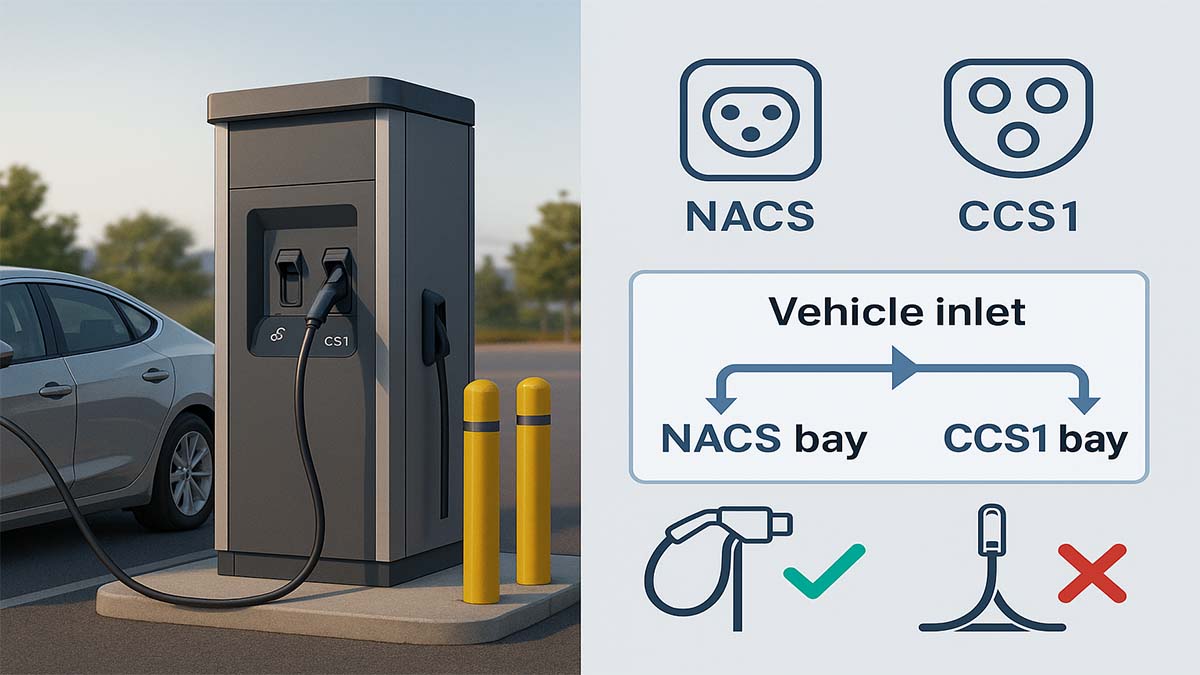
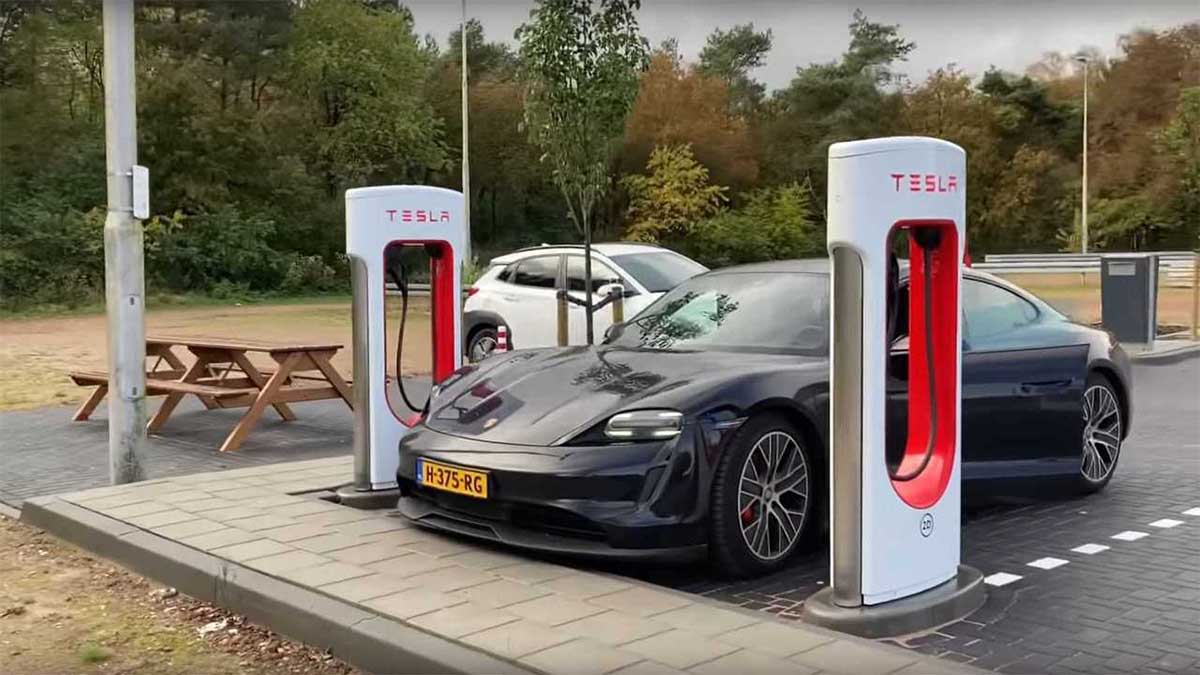
    Porsche owners can now use Tesla’s Supercharger network across North America. For drivers, the change is simple: more places to charge, fewer detours, and smoother long trips. The first phase relies on NACS adapters, followed by native ports on newer models. That means the next few months will blend two experiences—plugging through an adapter at busy sites, and later, direct NACS sessions that feel as straightforward as any other stop.   What does that look like on the ground for owners? Expect route planners to open up new options. You may still need to start sessions in a specific app until account integrations settle, but the routine feels familiar: park, plug, confirm, go. One tip for adapter users: mind the angle when you seat the plug, especially with heavier cables or tight parking lines. Good cable management and a natural grip save seconds, but they also protect the connector over time.   For station operators, the headline is not just access—it’s throughput. When an influx of premium EVs lands on an already popular network, the bottleneck shifts to the last meter: handle, cable, inlet, and the way heat is handled during the first 10–20 minutes of a fast session. If the connector and cable can hold the target current longer before derating, dwell times shorten, and the queue moves. Two dashboard metrics deserve attention over the next few weeks: average time per session in a fixed state-of-charge window, and the frequency of thermal derates on warm afternoons. If both worsen, your chokepoint is probably the thermal path in the handle and the strain on the cable reliefs—not the charger cabinet.   Standards are catching up to the new reality. NACS is formalized as SAE J3400, and the J3400/2 update digs into the connector and inlet details that matter for reliability. That gives procurement teams a clearer spec to write against, and it gives service teams a shared language for training and troubleshooting. The adapter phase will taper as native ports roll out, but the core job stays the same: keep current steady, keep stalls open, keep the experience consistent.   This is also a maintenance story. Build a small on-site kit—seals, latches, fasteners—and document torque steps that techs can follow without guesswork. Log temperature readings during peak heat and map them against power curves. If you catch rising temperatures at the same timestamp every day, you can swap parts on your terms, not during a rush hour outage.   Where does Workersbee fit? Our focus is on connector uptime. The NACS DC connector design leans on silver-plated contacts for stable delivery under load, temperature sensing that field teams can actually read, and a housing shape that guides a natural grip when cables are heavy or parking angles are awkward. Seals are replaceable. Sensors are accessible. Torque steps are documented so a swap does not become a teardown.   In short, Drivers get more routes with fewer detours; operators win or lose on the last meter. Prioritize NACS hardware that holds current when the pavement is hot, surfaces temperature you can trust, and lets a tech swap wear parts in minutes. Do that, and queues shrink without adding new bays. That’s the principle behind Workersbee’s connector design—steady delivery, clear diagnostics, curbside serviceability.
    Read More
  • EU RED Cybersecurity Rules Now Apply to Connected EV Chargers
    September 05, 2025
    Summary From August 1, 2025, the EU Radio Equipment Directive (RED) cybersecurity provisions for connected products are enforceable. For EV charging, any charger with Wi-Fi, cellular, or BLE must meet security-by-design requirements; devices that process personal data must add privacy protections; and products enabling payments must implement anti-fraud controls.   The European Commission has listed EN 18031-1/-2/-3:2024 as harmonized standards to presume conformity. The OJ listings include restrictions, so only correctly applied normative clauses grant presumption. Devices without wireless modules are generally outside Article 3(3), but system-level compliance still applies to the charger as a whole.     What changed and why it matters • Scope now goes beyond RF compliance. Connected functionality carries mandatory security, privacy, and anti-fraud controls.   • A clear conformity route exists. Adopting EN 18031 can provide presumption; otherwise, use a Notified Body route.   • Procurement will tighten. EU tenders and audits will ask for signed updates, credential policies, SBOM, vulnerability handling, and user guidance.      Who is affected in the charging ecosystem • DC and AC chargers with embedded connectivity (LTE, Wi-Fi, BLE). • Back-office integrated features that rely on device credentials, logs, or OTA updates. • Chargers that accept ad-hoc payments or support payment tokens. • Hardware accessories without wireless modules are usually out of scope, while the charger as a system remains in scope.   Key dates and milestones Note: The EN 18031 listings in the OJ include restrictions; only correctly applied normative provisions grant presumption of conformity.     Milestone | What it means for EV charging January 30, 2025 | EN 18031-1/-2/-3:2024 listed in the Official Journal, enabling presumption of conformity when correctly applied. August 1, 2025 | RED cybersecurity provisions (Articles 3(3)(d)(e)(f)) are enforceable for in-scope radio equipment, including connected chargers. 2025–2026 | Manufacturers and operators align documentation packs (risk assessment, test reports, SBOM, update policy) and roll out field hardening.   Supplier evaluation criteria for EU RED–compliant EV chargers (EN 18031 checklist) Use the following EN 18031 checklist to review systems quickly.   Firmware security and updates (signed images, rollback protection, encrypted channels, key rotation). Clarifier: prevent unauthorized code and ensure safe recovery.   Access control (no default or empty passwords, first-login change, lockout and rate limiting, least-privilege accounts). Clarifier: block easy break-ins and limit lateral movement.   Network abuse protection for OCPP/MQTT/HTTPS (throttling, anomaly detection, replay and flood safeguards, hardened services). Clarifier: stop botnet enrollment and traffic storms.   Privacy and logs (data minimization, retention schedules, user-facing privacy notice, secure log export). Clarifier: collect only what you need and keep it safe.   Payments, if present (end-to-end encryption and signing, tamper-evident design, dual control for refunds and settlements). Clarifier: protect value transfer and reduce fraud risk.   Evidence bundle (EN 18031 coverage matrix, test reports, vulnerability disclosure and patch SLAs, user-manual security section, EU Declaration of Conformity, technical file index). Clarifier: show proof, not promises.     Requirement-to-use-case map   RED requirement | Typical EV charging use case | Examples of acceptable controls 3(3)(d) Network misuse | Prevent botnet enrollment or DDoS via the charger modem | Firewalling, rate limits, TLS mutual authentication, hardened services 3(3)(e) Data protection | Handle driver identifiers, session data, metadata | Data minimization, pseudonymization, access logging, retention policy 3(3)(f) Fraud prevention | QR-code or card-based ad-hoc payments | Cryptographic proofs, secure elements or HSM, dual control on refunds     How to operationalize compliance (field-ready flow) Identify scope → Threat and gap assessment → Implement controls (firmware, credentials, communications, payment, privacy) → Validate (internal tests and, if needed, a Notified Body) → Compile technical file (risk analysis, SBOM, test reports, EN 18031 mapping, user instructions) → Issue EU DoC and label → Monitor and patch with defined disclosure and remediation SLAs.   30–60–90 day action plan Days 0–30: Confirm which models include wireless modules; map Article 3(3)(d)(e)(f) applicability; draft SBOM and initial risk assessment; line up EN 18031 coverage.   Days 31–60: Ship credential policies and secure update; harden OCPP/MQTT/HTTPS; minimize and document data; define fraud controls for payment flows; schedule third-party or Notified Body review if not fully aligned to EN 18031.   Days 61–90: Finalize testing, technical file, and EU DoC; label and release; pilot field hardening on selected sites; publish vulnerability handling and patch SLAs.     Impact on product roadmaps • 15118-enabled chargers and OCPP 2.x back-ends will emphasize stronger credential and certificate handling.   • RFPs will weigh security update operations and evidence quality as much as nameplate power.   • Reliable OTA reduces site visits and supports lower lifetime cost.     Workersbee note Workersbee supports EU-bound projects with connector-and-cable assemblies and aligns charger integration guidance with RED cybersecurity controls. For DC programs that seek presumption of conformity, our engineering team can provide a concise EN 18031 coverage checklist and sample technical-file wording through the anchors: Workersbee engineering guidance, Workersbee DC connector know-how.       FAQ Q: If a charger has no payment feature, does Article 3(3)(f) still apply? A: No. Only devices enabling payments or transfer of monetary value fall under 3(3)(f). The same charger may still need to meet 3(3)(d) and 3(3)(e).   Q: Do I need a Notified Body if I adopt EN 18031 completely? A: Full and correct application of the harmonized standards can grant presumption. If only partial adoption or uncertainty exists, a Notified Body route reduces risk.   Q: Do the OJ restrictions mean EN 18031 alone is always enough? A: No. Only correctly applied normative clauses grant presumption. If you deviate or face ambiguous cases, use a Notified Body route.   Q: What evidence do auditors usually request first? A: Signed-update policy, password policy, SBOM, vulnerability handling workflow, EN 18031 mapping table, and the EU Declaration of Conformity.
    Read More
  • Megawatt Trials in Europe: Connector Requirements for Fleet Deployments
    September 03, 2025
    A real-world trial in Switzerland moved megawatt charging from theory to practice. A long-haul electric truck with an ~1 MWh battery pack went from roughly 10% to 80% state of charge in 42 minutes. The session delivered around 625 kWh, averaging close to 0.9 MW with a peak near 1.1 MW. The site used a containerized charger with a battery buffer to smooth grid demand and sustain high output.       Why it matters for operations • Fits the driver break window: long-haul routes can plan a meaningful top-up without blowing the schedule. • Eases grid constraints: buffer-assisted hubs can start smaller, then scale connection capacity over time. • Signals hardware maturity: connectors, cables, and cooling systems are being validated under real loads, not just in labs.     Key Specifications for Megawatt-Class Connectors • Continuous power, not just peak: share temperature-rise and voltage-drop data for full 30–45-minute sessions at ≥1 kA, across hot and cold conditions.   • Cooling design and service: coolant type, leak detection, pump redundancy, and whether the front end can be swapped without draining the loop.   • Ergonomics at the apron: handle weight and grip with gloves, bend radius, and options like booms or retractors to manage heavy cables safely.   • Safety and telemetry should include HVIL continuity, temperature sensors on the pins and in the coolant loop, pressure/flow monitoring, and a clear thermal derating policy.   • Environmental hardening: IP/IK targets, salt-spray and gravel-impact test results, icing behavior, and abrasion resistance when cables contact the ground.   • Interoperability roadmap: evidence of cross-vendor testing and a certification plan; ability to run CCS2 HPC and MCS side by side during transition years.   • EMC and communications: shielding and error-rate data at high current; immunity to noise in real depot environments.   • Serviceability and total cost: MTTR for common failures, availability of seal/contact kits, and warranties sized for high-utilization depots.   • Site realities: confirm cooling performance and connector durability under back-to-back sessions and longer leads common in truck bays.       Workersbee note Start with one MCS pilot lane and run it like a real shift. Track three signals that actually decide success: bay uptime, steady power across the whole session, and connector temperature. Select hardware that can be serviced and diagnosed within minutes, and ensure drivers can plug in, reach the bay, and route the cable comfortably. Keep a CCS2 high-power lane alongside for a smoother transition. Scale only after the pilot data is solid and the maintenance plan is simple and agreed.     For a practical deep dive on power levels, ergonomics, and compliance checklists, see our in-depth guide: Megawatt Charging System (MCS) Guide for Heavy-Duty EVs — 2025
    Read More
  • ChargePoint and Eaton Set a New Bar for High-Power Fast Charging
    August 29, 2025
    ChargePoint and Eaton announced a station-level DC fast-charging platform designed to deliver up to 600 kW for passenger EVs and pave the way for megawatt-class charging for heavy vehicles. The system is modular, aims to cut installation and operating costs, and targets initial deliveries in the second half of 2026 across North America and Europe.   Why this matters Shorter stops: For vehicles that can accept higher power, 600 kW reduces dwell time and improves bay turnover. Smarter sites: Integrating power electronics with the site’s electrical backbone can shrink the footprint and simplify expansion with batteries or solar later on. Clearer planning window: A stated delivery timeline allows charge-point operators and fleets to begin grid discussions, budget planning, and layout design now.     How the platform is positioned Building-block power: The site is built from power modules that can be directed to different bays based on demand or combined for very high power when a truck arrives. DC-centric layout: More coordination happens on the DC side of the site, which can reduce conversion losses and make it easier to add on-site storage. Grid interaction ready: The design anticipates vehicle-to-grid and facility support functions, enabling peak shaving and backup power where rules and hardware permit.     Implications for different stakeholders For site hosts and CPOs Grid first: High-power bays are only as good as the upstream connection. Start utility engagement early, including transformer sizing, protection settings, and demand charges. Bay mix strategy: Most traffic is well served by 150–300 kW bays. Add a smaller set of 450–600 kW bays for high-voltage cars and time-critical users to keep queues moving. Construction approach: Prefabricated skids and modular cabinets can shorten some on-site work, but utility upgrades and permits remain the critical path.   For fleets and logistics Megawatt on-ramp: The roadmap supports practical high-power charging for heavy trucks at depots and selected corridors, narrowing the gap with diesel turnarounds. Human factors: Higher currents mean thicker, cooled cables and heavier connectors. Plan for assist arms, robust holsters, and quick-swap wear parts to protect uptime.   For drivers More predictable sessions: Smarter power management should reduce power swings during charging and allow better off-peak pricing as operators align energy use with tariffs.     Workersbee perspective and recommendations As a supplier of DC connectors and cable assemblies, we focus on turning headline power into reliable daily operation:   Choose the right coolingAt 350–600 kW and above, liquid-cooled cable sets and serviceable gun-head modules move from nice-to-have to must-have. Match cooling capacity and conductor size to your climate and expected duty cycle. For hot regions and highway sites with long peak periods, add margin. Design for maintainabilityDefine quarterly checks for contact wear, seal condition, coolant cleanliness, flow rate, and pressure drop. Stock spare front-end modules and seals at busy locations. A 30-minute swap is far cheaper than a day of reduced power. Validate communication earlyHigh-power sessions are unforgiving of handshake glitches. Run interoperability tests with the vehicles you expect most often, including ISO 15118 features, to avoid drop-to-low-power events during the most valuable minutes of a session. Stage upgradesPilot one high-power lane at a representative site before scaling. Track delivered energy, true peak duration, thermal throttling thresholds, and connector wear. Use those measurements to finalize the bay mix across your network.     Risks and watch-outs Timeline vs. field reality: A 2026 target still depends on utility upgrades, local approvals, and supply chain stability. Build contingencies into rollout plans. Vehicle limits: Not every vehicle can use 600 kW. Real-world times depend on battery size, voltage, and thermal design. Model average delivered power, not just peak numbers. Thermal bottlenecks: As cabinet ratings climb, the practical limit often moves into the cable and handle. Under-spec cooling leads to throttling, not faster turns.     Action checklist for the next 60 days Map your bay mix for 2026–2028 projects: majority mid-power, minority ultra-high-power. Start a utility pre-study covering capacity, interconnection options, and demand charge exposure. Request connector and cable specifications that align with your hottest expected ambient and duty cycle, including recommended spare kits. Schedule interoperability tests with your local fleet partners and the top models in your region. Build a maintenance playbook with inspection intervals, coolant procedures, and swap times for wear parts.     This announcement signals a shift from bigger single chargers to smarter, site-level systems. The winners will treat power blocks, storage, grid capacity, and cooled cable hardware as one plan, not four separate purchases. Do the grid homework early, design for maintainability, and reserve ultra-high-power for the users who truly need it. That is how higher headline power becomes a dependable experience at the curb.
    Read More
  • Policy tailwinds and network build-out: what this week means for DC fast charging
    August 22, 2025
    The past few days brought three signals that matter for anyone planning, funding, or supplying high-power charging. First, U.S. federal guidance for the NEVI program was reissued in an interim final form designed to streamline state implementation. Second, California opened a new statewide incentive window that can cover up to the full installed cost of ready-to-build DC fast-charging sites. Third, European data updates show the network continuing to scale after passing the one-million-charger mark in 2024. Together, these point to a second half of 2025 that prioritizes faster deployment and higher operational reliability.     Why the federal signal matters in the U.S.FHWA’s interim final guidance for NEVI took effect on August 13, 2025, while inviting public comment. The intent, in DOT’s summary, is to streamline requirements and give states more flexibility in how they write plans and move projects forward. For developers and suppliers, that reduces ambiguity in timelines and should help convert backlogs into energized sites. If states respond by simplifying procurement and approvals, expect steadier order flow into Q4.     California just made ROI easier to pencilOn August 5, the California Energy Commission opened applications for the Fast Charge California Project, with at least $55 million available. The window runs from August 5 to October 29, 2025, and prioritizes ready-to-build projects—those with final utility service design and issued permits in hand. Incentives can cover up to 100% of eligible costs, capped at $55,000 per port for 150–274.99 kW and $100,000 per port for 275 kW and above. Notably, J3400 connectors are eligible, but each site must still install at least 50% CCS connectors. These design details will influence hardware mixes and cable/handle specifications at the site level.     Europe’s map keeps filling in—especially at higher powerIEA’s 2025 outlook shows Europe grew public charging points by more than 35% year-over-year in 2024, surpassing one million. The EU’s AFIR requirement—150 kW stations every 60 km on core corridors by 2025, with power minimums rising by 2027—continues to push high-power builds, while EAFO’s mid-August data update confirms ongoing additions across member states. For cross-border fleets and highway sites, that means more consistency in connector standards, power levels, and driver experience—raising the stakes for uptime and serviceability.     From getting built to staying availableScale is no longer the only story. As networks densify, what differentiates sites is how well they operate in heat, cold, salt spray, and holiday peaks. Three practical areas deserve attention:   • Thermal and contact performance. High current over long sessions amplifies any weakness in contact resistance and heat dissipation. Selecting handles and cable assemblies that keep surface temperature comfortable and minimize resistive losses under sustained load will pay back in user experience and lower derating events.   • Real-world ingress protection. Lab ratings matter, but so do the details: performance when the plug is mated versus unmated, behavior under high-pressure jets versus immersion, and how holsters and caps keep grit and water out between sessions. Pairing the right IP strategy with matched storage hardware reduces contamination that drives early failures.   • Field serviceability by design. Swappable wear parts, clear torque specs, and defined toolkits cut mean time to repair. Writing these expectations into the site’s operations scope—along with spares and response SLAs—protects uptime during peak demand.     What this means for 2025 H2 procurementUnited States: Expect some states to accelerate NEVI-related contracting under the streamlined guidance. Hardware that shortens installation and commissioning—clean utility interfaces, robust OCPP implementations, and proven commissioning workflows—will help projects meet the tighter funding windows.   California: The Fast Charge California rules create a strong pull for high-power, public-access DCFC where civil work and utility design are already complete. The 100%-cost coverage cap makes it feasible to upgrade to higher-power ports or add more stalls where dwell time is short. Given the connector rules, sites will likely standardize on CCS with selective J3400 to serve newer vehicles without sacrificing eligibility.   European Union: The combination of AFIR targets and the million-plus installed base is shifting attention from where to build to how to deliver consistent charging speeds and minimize queues. Specifying longer, durable cables for varied parking geometries, and choosing handles with proven ergonomics in rain and cold, will matter as much as nameplate power.     Where Workersbee fitsFor buyers and integrators, the safest path is to pair power density with ruggedization and easy upkeep. That means DC handles and liquid-cooled or naturally cooled cable sets engineered for low thermal rise, tight ingress control in both mated and unmated states, and fast field swaps of high-wear components. Those are exactly the qualities Workersbee focuses on in connector and cable design, and they directly support the policy-driven build-out now underway. Policy momentum is backstopping investment, state programs are rewarding ready-to-build projects, and Europe’s network keeps scaling at higher power. Sites that translate those tailwinds into reliable, comfortable charging—by sweating the details in connectors, cables, and serviceability—will win the next six months on both utilization and customer satisfaction.
    Read More
  • EU's New EV Charging Rules Take Effect: A Major Upgrade for Electric Vehicle Infrastructure
    August 08, 2025
    Two major EU policies have just come into force — and if you're building, operating, or sourcing for EV charging projects in Europe, they directly impact your next move.   These regulations are reshaping how EV chargers are designed, installed, and integrated into both public infrastructure and private buildings across the EU.     What’s New? AFIR (Alternative Fuels Infrastructure Regulation) Applies to: Public highway charging stations   Minimum 400 kW total output per site   At least one charger must provide ≥150 kW   Required for stations along the TEN-T network by the end of 2025       EPBD (Energy Performance of Buildings Directive) Applies to: New or renovated commercial buildings  Must be pre-equipped with cabling for EV chargers  Covers office buildings, malls, apartments, and parking garages  Applies to projects starting in 2025–2026, depending on the country     Why This Matters Europe registered over 3.2 million EVs in 2024, yet most public chargers still offer under 22 kW   These new rules push the industry toward ultra-fast, accessible, and building-integrated charging   Projects that don’t meet these specs could face compliance issues, delays, or expensive retrofits     What Stakeholders Should Focus On Area Action Highway Charging Upgrade designs to deliver ≥150 kW per port Connectors & Cabling Use components rated for 500 A+ and liquid cooling, ideal for sustained high-power use Building Projects Plan EV-ready wiring from the architectural stage Regulatory Compliance Prioritize EU-certified, modular hardware that supports future upgrades Supplier Partnerships Work with vendors familiar with AFIR/EPBD timelines and technical standards       Insights from the Field At Workersbee, we’re seeing increased demand from European partners for high-current DC charging connectors designed for urban and highway applications.   Our product lines — including liquid-cooled connectors rated up to 500 A — are developed to support infrastructure projects that aim to comply with the EU’s evolving fast-charging requirements.     What to Do Now Reassess your station specs — align with 150 kW+ expectations   Plan cabling early in all new or renovated building projects   Choose modular hardware to avoid stranded assets down the line   Monitor local rollouts — each country may set different implementation timelines     The EV transition in Europe is no longer on the horizon — it’s happening now. With regulations tightening and demand accelerating, success will depend on readiness, adaptability, and working with partners who understand both the technology and the policy landscape.   At Workersbee, we’re committed to supporting the shift with components designed for high-performance, compliance, and future growth.   If you're preparing for AFIR or EPBD-aligned projects and want to explore compatible solutions, our team is here to help — whether you're designing, sourcing, or scaling.
    Read More
  • Workersbee Weekly Buzz | Issue #1 (August 1, 2025)
    August 01, 2025
    EV Charging Trends, Tech & Insights Curated by Workersbee   Top Headlines This Week Blink Charging Deploys 20 High-Powered DC Fast Chargers at Key Border Corridor Blink Charging has installed 10 dual-port 180 kW DC fast chargers (20 ports total) at the Imperial Center in California, strengthening EV infrastructure between I8 and SR111. This site is now a vital link for cross-border and regional traffic.More from StockTitan »     Plugzmart Launches 'Relay' to Bridge Charging Networks Without OCPI Lock-In India-based Plugzmart introduces Relay, a platform that enables charging networks to interconnect across different CMS providers—without requiring full OCPI implementation. The move simplifies multi-network integration and boosts flexibility for CPOs.Details on Times of India »     Chevy Bolt Is Back—with NACS Plug and Under $35K Price Tag GM has confirmed a second-generation Chevrolet Bolt, redesigned with the Ultium platform and equipped with Tesla's NACS port. The relaunch aims to offer an affordable EV with access to Supercharger stations by 2027.Full story on Road & Track »     California Hits 21.6% EV Share in Q2 Vehicle Sales California continues to outpace the rest of the U.S. in EV adoption. In Q2 2025, electric vehicles made up 21.6% of new car sales—double the national average—thanks to robust incentives, infrastructure, and consumer awareness.More on CleanTechnica »     Tech Focus: The Rise of Ultra-Fast Charging 350 kW+ Charging Systems Become the New Norm Ultra-fast charging stations (350 kW and above) are becoming increasingly common worldwide. Supported by liquid-cooled connectors and smart thermal regulation, these systems enable 15–20 minute charging sessions for modern EVs.Adoption is rapidly increasing across North America, Europe, and Asia.Read S&P Global’s analysis »     Industry Report of the Week IEA – Global EV Outlook 2025: EV Charging ChapterExplore the evolution of public EV infrastructure, the shift to ultra-fast charging, and the regional deployment gaps in this authoritative global report.Download the report »     This week reflects key movements in EV charging: strategic infrastructure deployments, new interoperability solutions, and stronger commitments to universal access standards like NACS. Workersbee continues to monitor the pulse of global trends—bringing clarity to complexity.   [Follow Workersbee on LinkedIn]
    Read More
  • Workersbee Launches Rooftop Solar Power System to Support Sustainable Manufacturing
    July 25, 2025
    On July 19, 2025, Workersbee officially put its rooftop photovoltaic (PV) power system into operation at the company’s new factory site. This milestone marks a major step in our commitment to sustainable development and energy efficiency.     The solar power system consists of 1,241 solar components—146 in blue, 1,046 in cyan, and 49 in green. The system has a direct current (DC) capacity of 781.83 kWp and an alternating current (AC) capacity of 660 kWp. Six 110 kW inverters are used, with a capacity ratio of 1:1.18, ensuring the efficient conversion of solar energy into electricity.   This investment in green energy is not just symbolic—it’s highly practical. The rooftop PV system is expected to generate around 880,000 kWh of electricity annually. Based on current energy prices, this could help Workersbee save approximately 750,000 RMB in electricity bills each year. More importantly, the system will reduce carbon emissions by around 700 tons annually, contributing to China’s broader goals of carbon neutrality and sustainable industrial development.     As a manufacturer in the electric vehicle charging industry, Workersbee has long been focused on technological innovation, energy efficiency, and clean transportation. Installing a rooftop solar system aligns with our core values: not only do we produce equipment that supports clean mobility, but we also aim to make our production processes as green as possible.   This project reflects a broader industry trend. As global demand for EVs increases, so does the need for greener manufacturing and supply chain practices. From sourcing raw materials to powering factories, companies across the EV value chain are being called to reduce their environmental footprint. Workersbee believes that sustainable production is not an option—it’s a responsibility.   Looking ahead, this solar initiative is just one step in our long-term energy transition roadmap. We will continue to explore more ways to reduce emissions, optimize energy use, and contribute to a cleaner, more sustainable future for mobility.   Through concrete actions, not just words, Workersbee is proud to take part in the global movement toward sustainability—starting from our rooftop.
    Read More
  • Workersbee Shines at Latin American Electronics Brazil 2025 – Leading EV Charging Solutions for Emerging Markets
    June 25, 2025
        Workersbee Powers Latin America's EV Growth at Electronics Brazil 2025 SÃO PAULO, BRAZIL – Suzhou Yihang Electronic Science and Technology Co., Ltd. (Workersbee), a premier EVSE provider and EV cable supplier, showcased its cutting-edge EV charging solutions at Latin American Electronics Brazil 2025 (June 23-26). As a trusted EV connector factory and EV charger factory, Workersbee demonstrated its commitment to electrifying Latin America’s transportation future. Driving Innovation in EV InfrastructureWorkersbee, a leading EV charging infrastructure producer, presented its comprehensive portfolio tailored to the region’s needs: Portable EV charger provider solutions for flexible, on-the-go power. Robust Type2 connector manufacturer offerings for residential/commercial reliability. High-speed CCS2 EV plug exporter systems for next-gen vehicles. Market-specific GB/T AC/DC EV connectors for Chinese EV imports. Dominating the Emerging MarketWith ~70% of EV charging exhibitors at the event using Workersbee’s connectors, our dominance in Latin America’s EV ecosystem was undeniable. As a top EVSE provider, we outperform European competitors through:✅ Cost-effective, high-performance solutions✅ Tailored products for distributors, importers & manufacturers✅ OEM/ODM support for scalable market entry Partner with the Pioneers"Latin America’s EV surge demands reliable, adaptable infrastructure," said Workersbee’s Regional Director. "As a vertically integrated EV charger factory and Type2 connector manufacturer, we deliver end-to-end solutions – from CCS2 EV plugs to complete charging systems." Electrify Your BusinessSource from Workersbee – your single-point EV cable supplier, EV connector factory, and portable EV charger provider – to capitalize on Latin America’s $1.2B EV charging boom. Contact us today for OEM/ODM partnerships:📧 info@workersbee.com🌐 https://www.workersbee.com/
    Read More

leave a message

leave a message
If you are interested in our products and want to know more details,please leave a message here,we will reply you as soon as we can.
  • Attach Files
Contact us:info@workersbee.com